From the Old Town to Puerto Banús and San Pedro de Alcántara: what each part of Marbella is like, and the homes we have there.
Area guide
Marbella, area by area
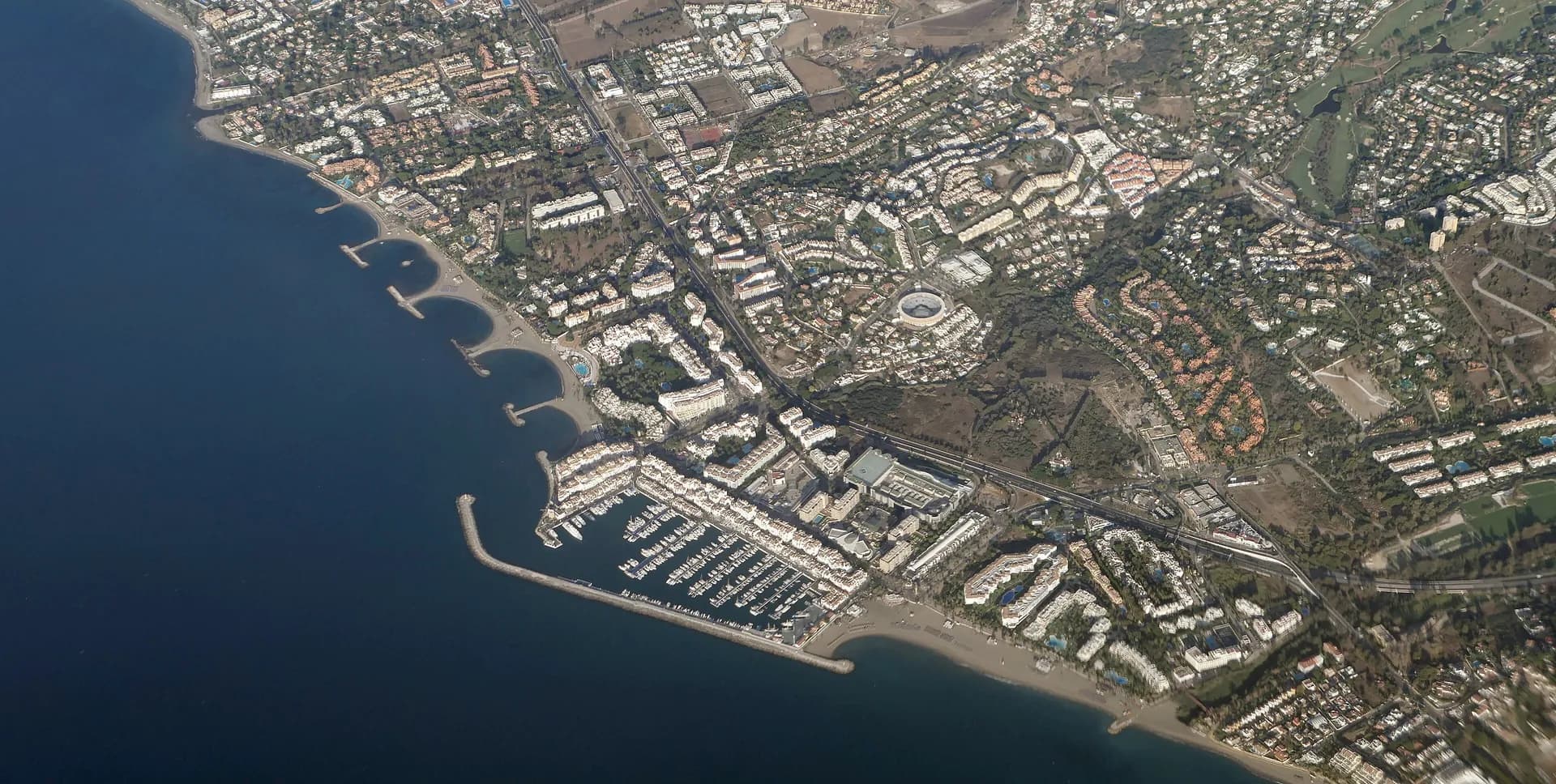
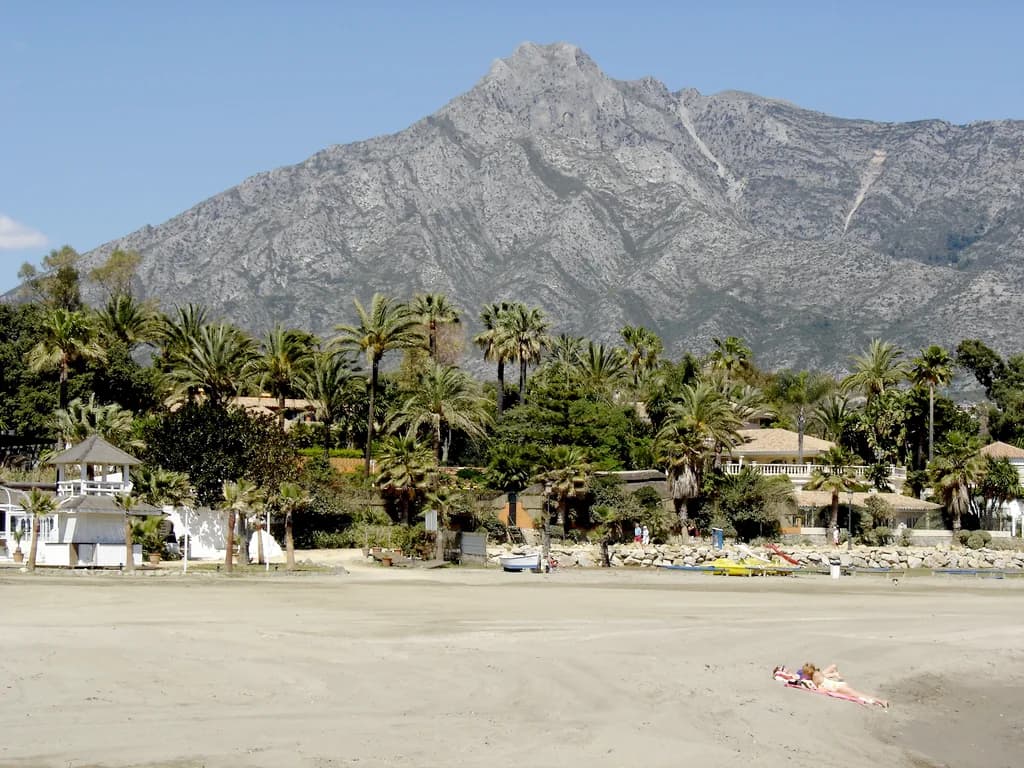
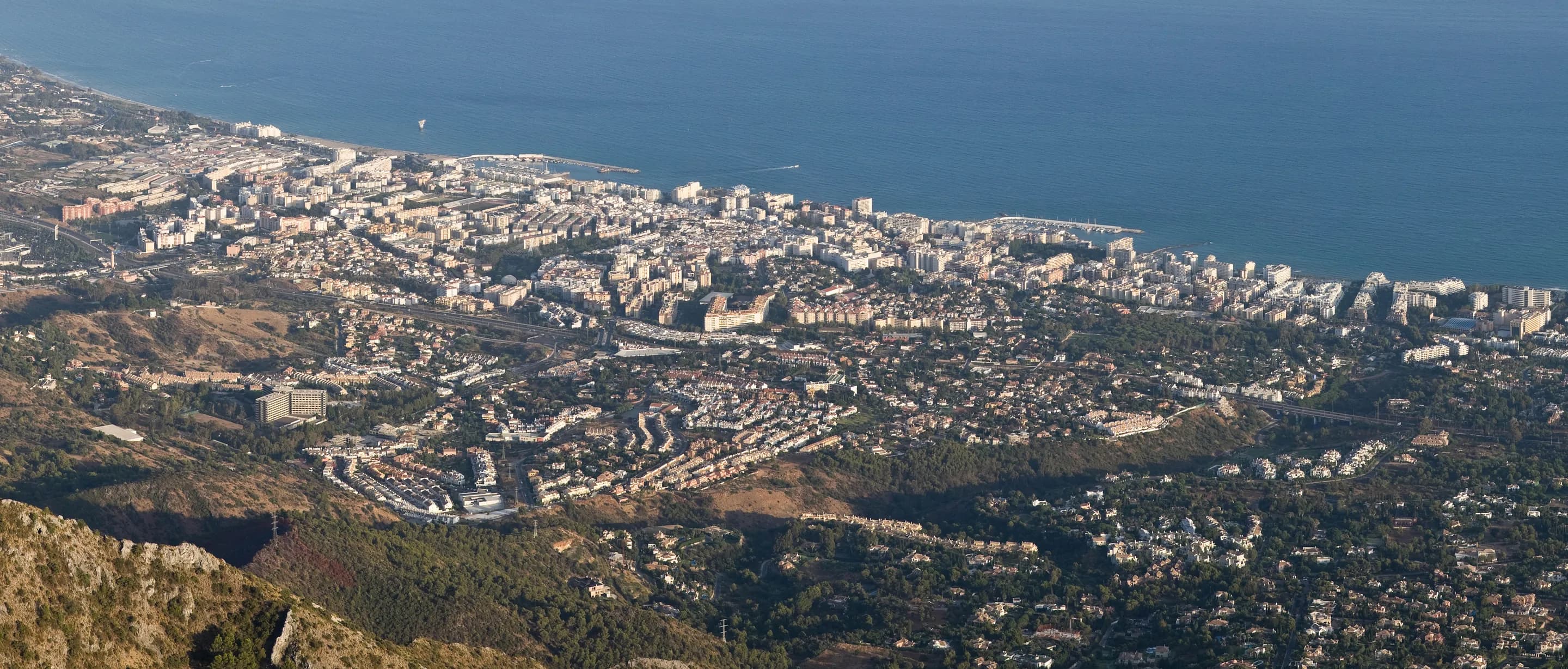
Marbella is a municipality in the province of Málaga, on the Costa del Sol. It has about 27 kilometres of coastline and lies at the foot of the Sierra Blanca, whose summit, La Concha, rises to around 1,200 metres behind the town.
The municipality is long and narrow, so where you stay shapes the holiday. The Old Town and the seafront are in the centre; the Golden Mile, Puerto Banús and Nueva Andalucía follow to the west, and San Pedro de Alcántara lies beyond them.
Most of Marbella's sights are in or near the Old Town and can be seen on foot in a day. The Roman remains lie further west, towards San Pedro de Alcántara.
The Old Town and the Plaza de los Naranjos
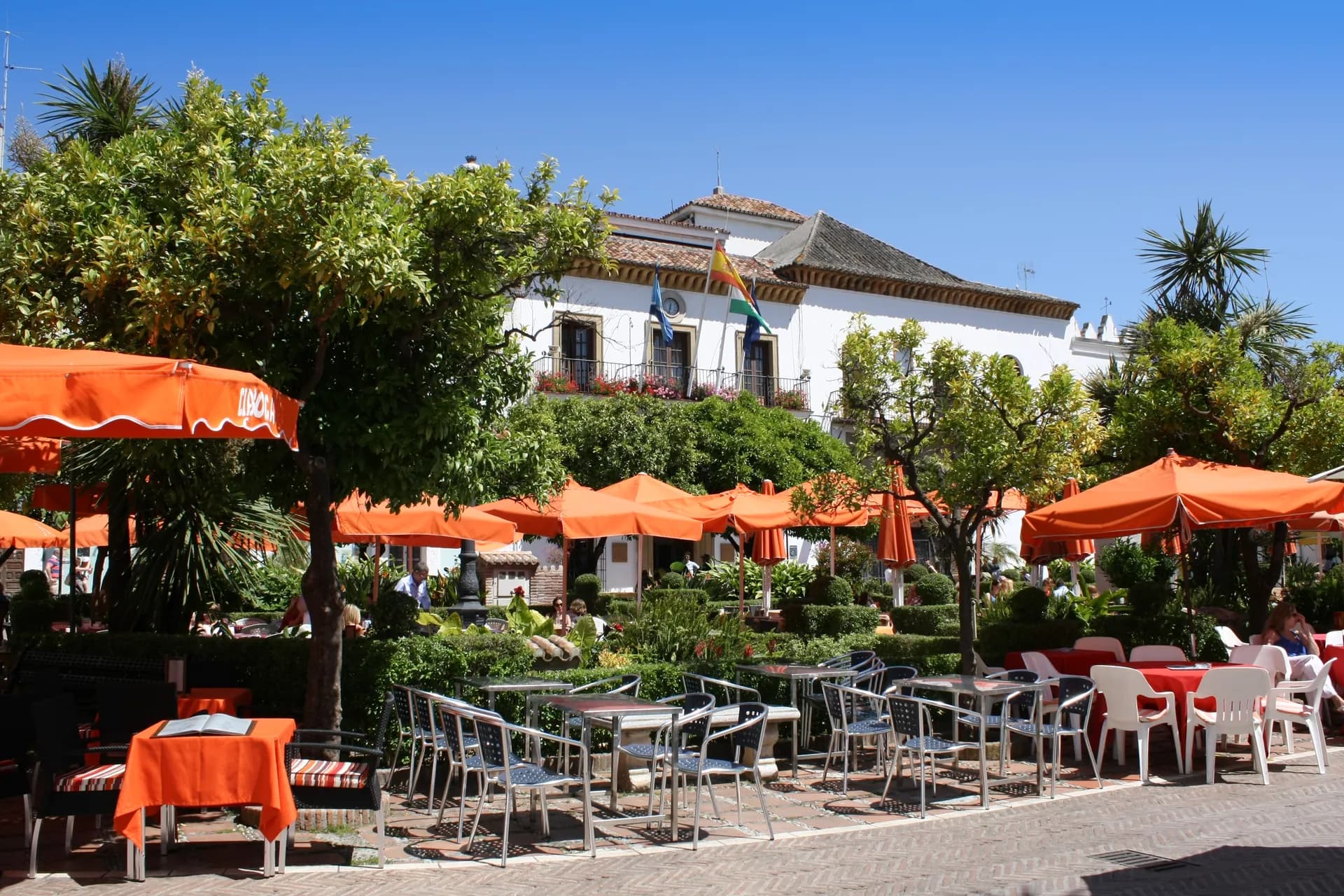
The Old Town (Casco Antiguo) is the historic centre of Marbella and keeps roughly the street plan it had in the 16th century. At its heart is the Plaza de los Naranjos, the Orange Tree Square, laid out after 1485 in the Castilian manner and still planted with orange trees.
The town hall and the old chief magistrate's house face the square, and café and restaurant terraces fill the middle of it. It is the natural place to begin a walk through the centre.
Whitewashed lanes, flowerpots and restaurant terraces
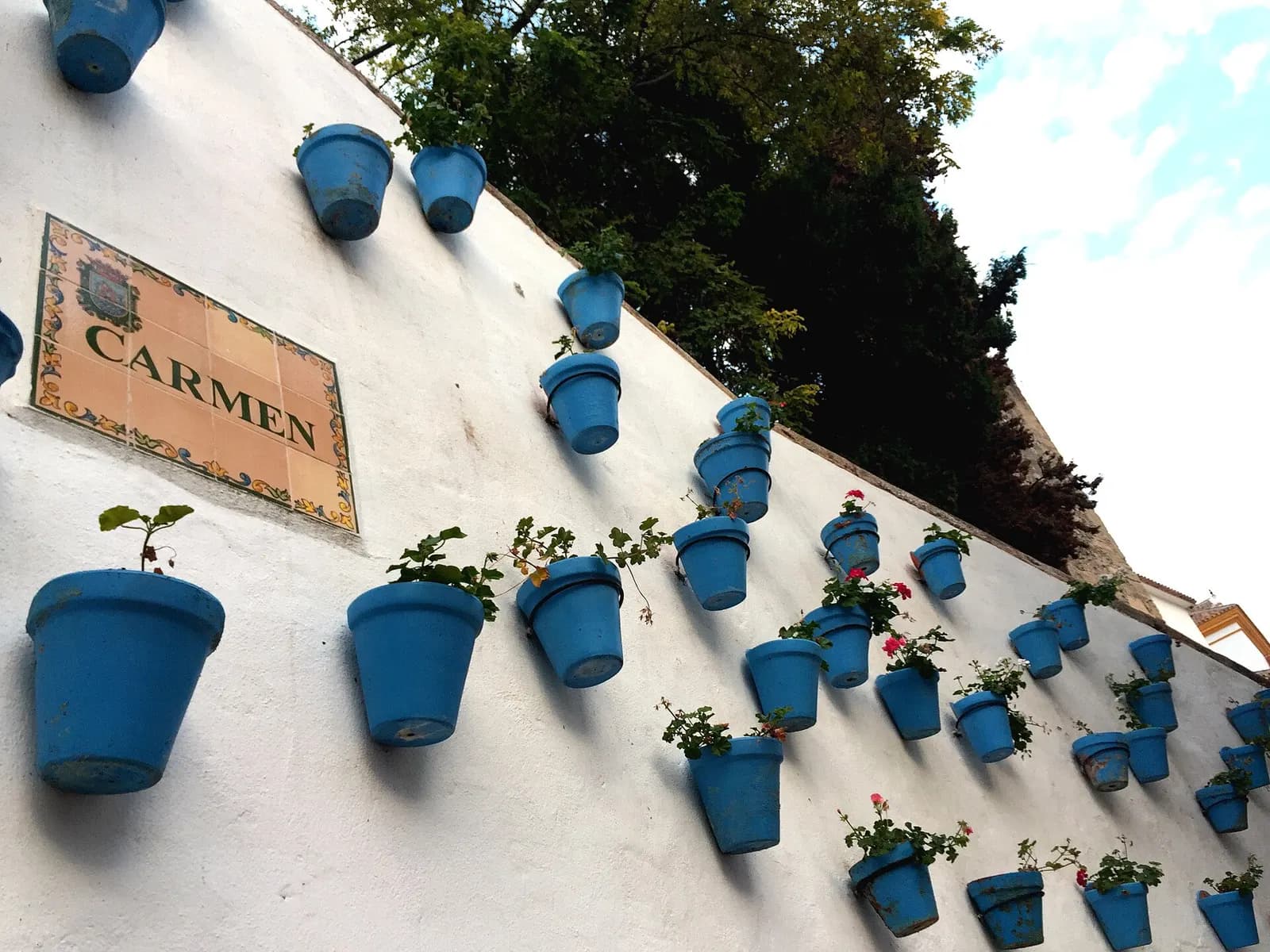
Around the square, narrow lanes run between whitewashed houses with iron balconies, bougainvillea and walls hung with flowerpots. Most are closed to traffic, so the quarter is explored on foot, with small squares and chapels along the way.
The lanes are also where much of the town eats. Restaurants range from tapas bars to fine dining, many with tables set out in the street or in a courtyard. In the same quarter, the Renaissance Hospital Bazán houses the Museum of Contemporary Spanish Engravings.
The Dalí sculptures on the Avenida del Mar
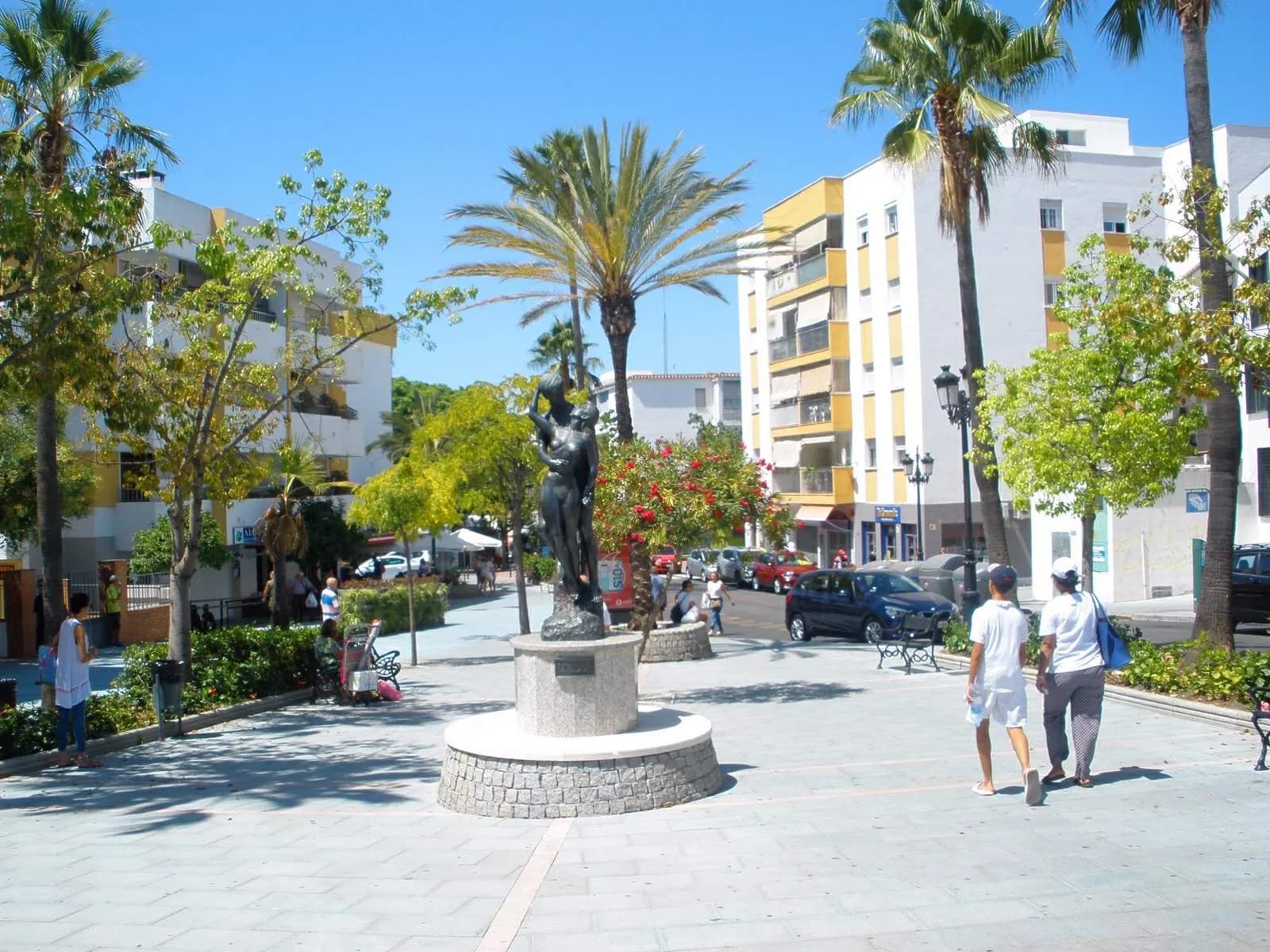
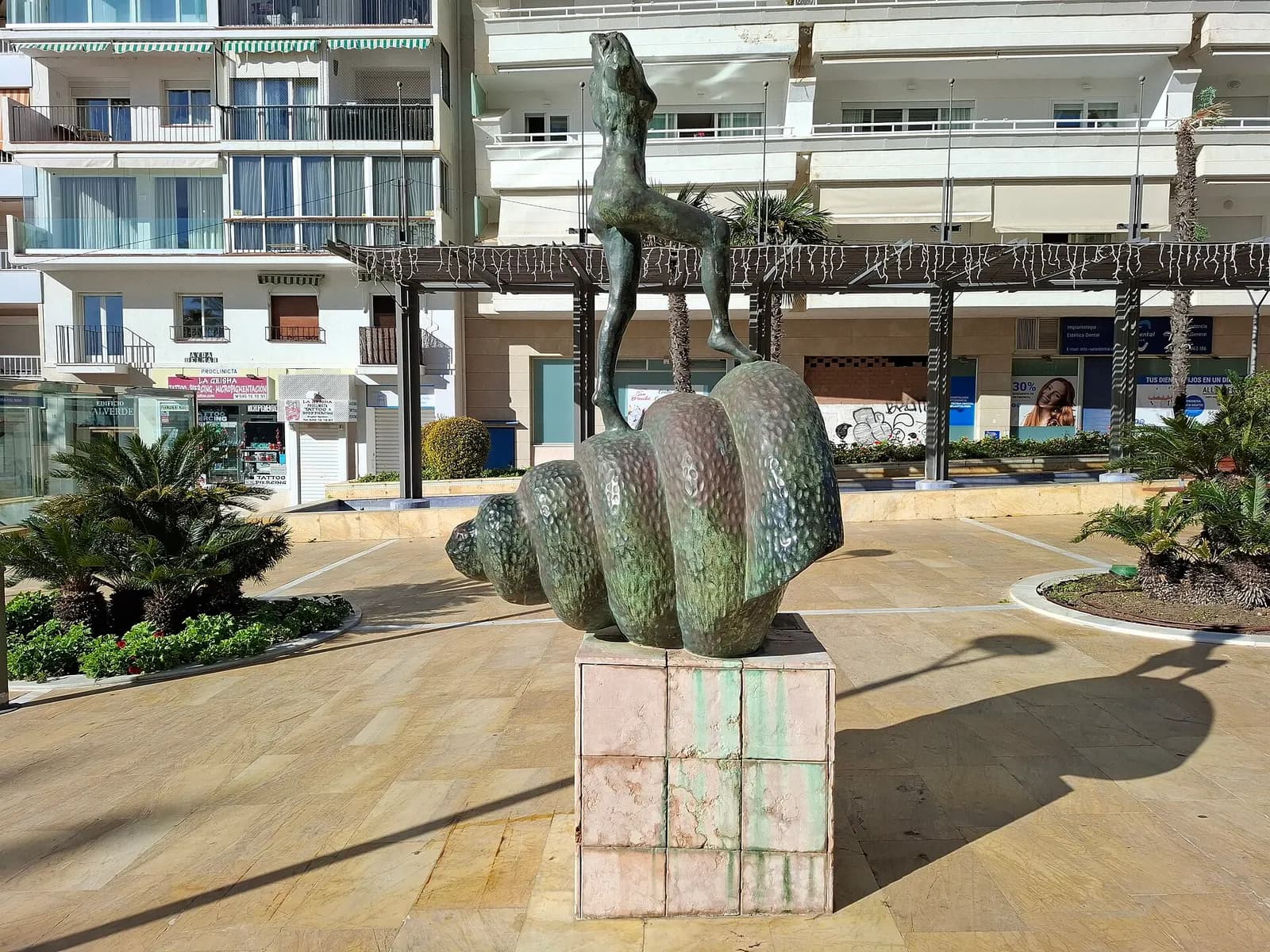
The Avenida del Mar is a pedestrian avenue that links the Old Town with the beach. Along it stands a collection of ten bronze sculptures by Salvador Dalí, set among fountains and gardens: an open-air gallery that costs nothing to visit.
The avenue begins at the Alameda park and ends at the seafront promenade, so it fits naturally into a walk from the Plaza de los Naranjos down to the sea.
The Alameda park
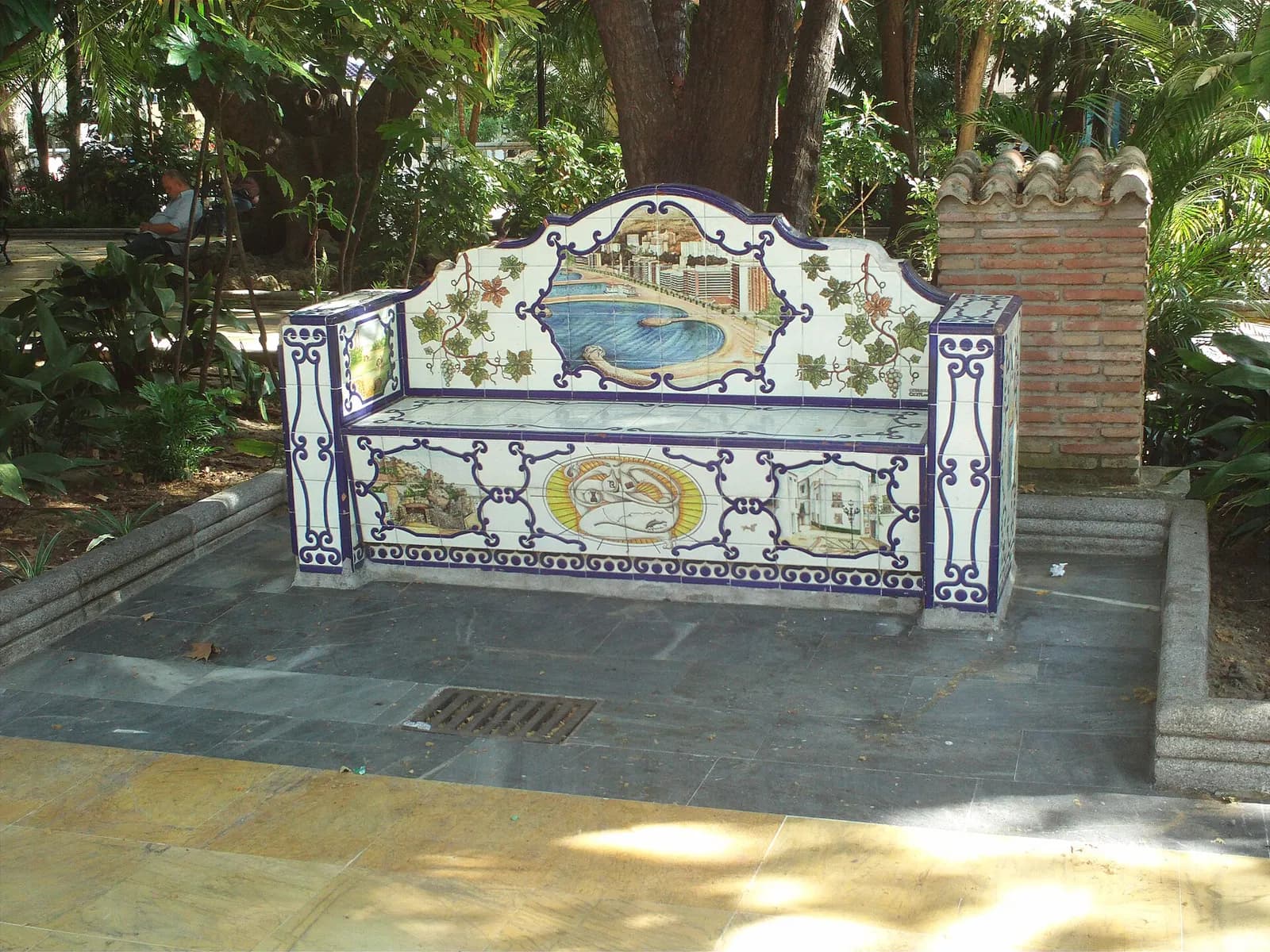
Between the Old Town and the Avenida del Mar lies the Paseo de la Alameda, a small, shaded park with a botanical garden of tall trees and a central fountain.
Its benches are covered in hand-painted Andalusian tiles. It is a cool place to sit in the middle of the day, a few steps from both the old lanes and the beach.
The Moorish castle walls and the Encarnación church
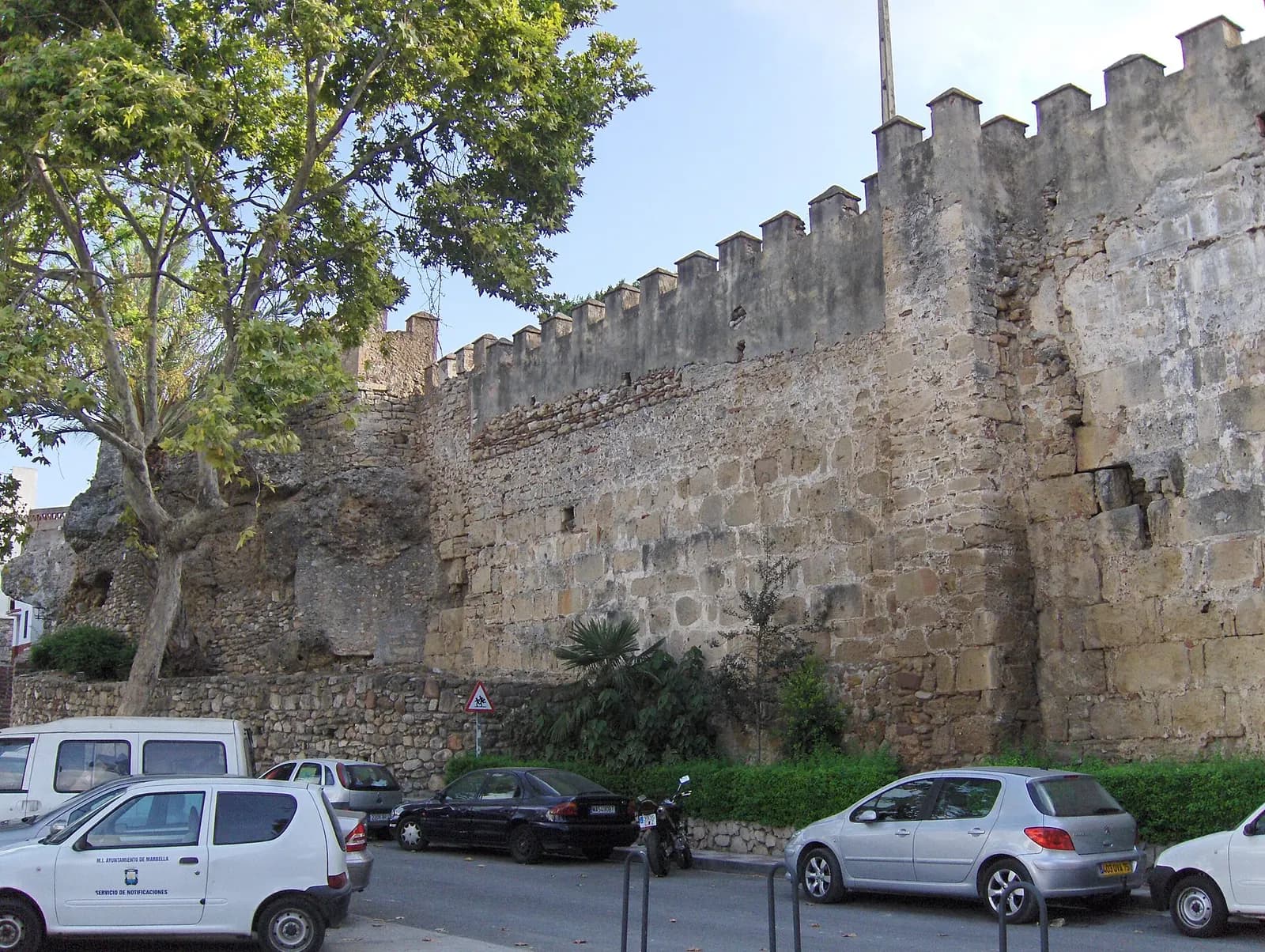
Marbella was fortified in the Islamic period: a castle was built in the 10th century, and stretches of its walls still stand at the edge of the Old Town. Roman capitals reused by the builders can be seen embedded in the stonework.
A short walk away is the church of Santa María de la Encarnación, a Baroque church begun in 1618, on a small square of its own.
Roman Marbella: Río Verde, Las Bóvedas and Vega del Mar
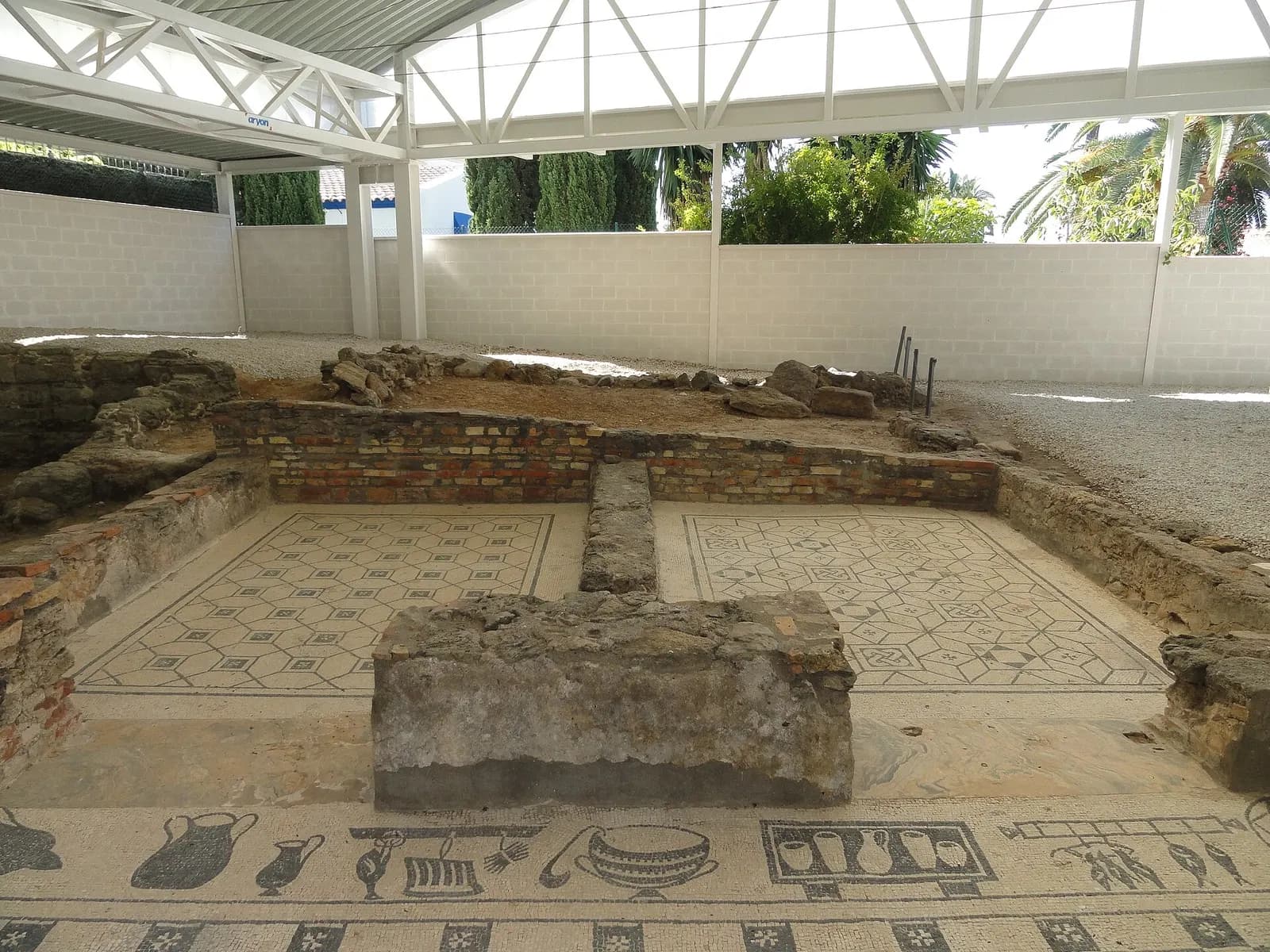
West of the town, near the mouth of the Río Verde, are the remains of a Roman villa whose mosaic floors date from the late 2nd century. One of them, in black and white, depicts kitchen utensils and food.
Near San Pedro de Alcántara are the Roman baths of Las Bóvedas and the early Christian basilica of Vega del Mar. All three sites open at limited times, so check before setting out.
Things to do in Marbella
Beyond the sights, days in Marbella are spent on the seafront, on the beach, in the mountains behind the town and at the table.
Walk or cycle the seafront promenade
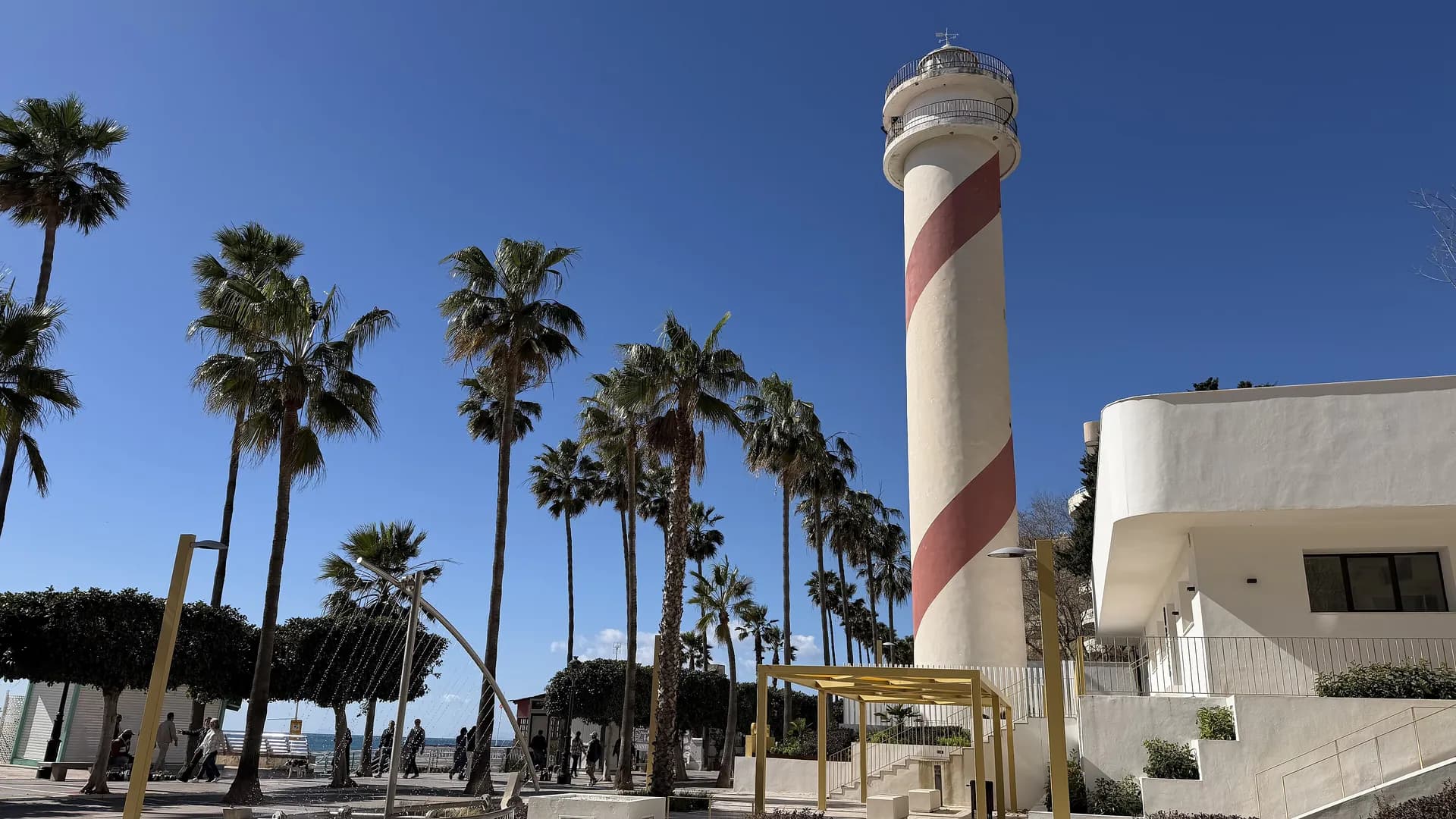
A seafront promenade (Paseo Marítimo) runs along the town's beaches, past the lighthouse and the leisure harbour. It is flat and lined with palms, cafés and beach restaurants.
The promenade continues west along the Golden Mile to Puerto Banús, about seven kilometres from the centre. Many guests walk or cycle part of it and return by taxi or bus.
The beaches
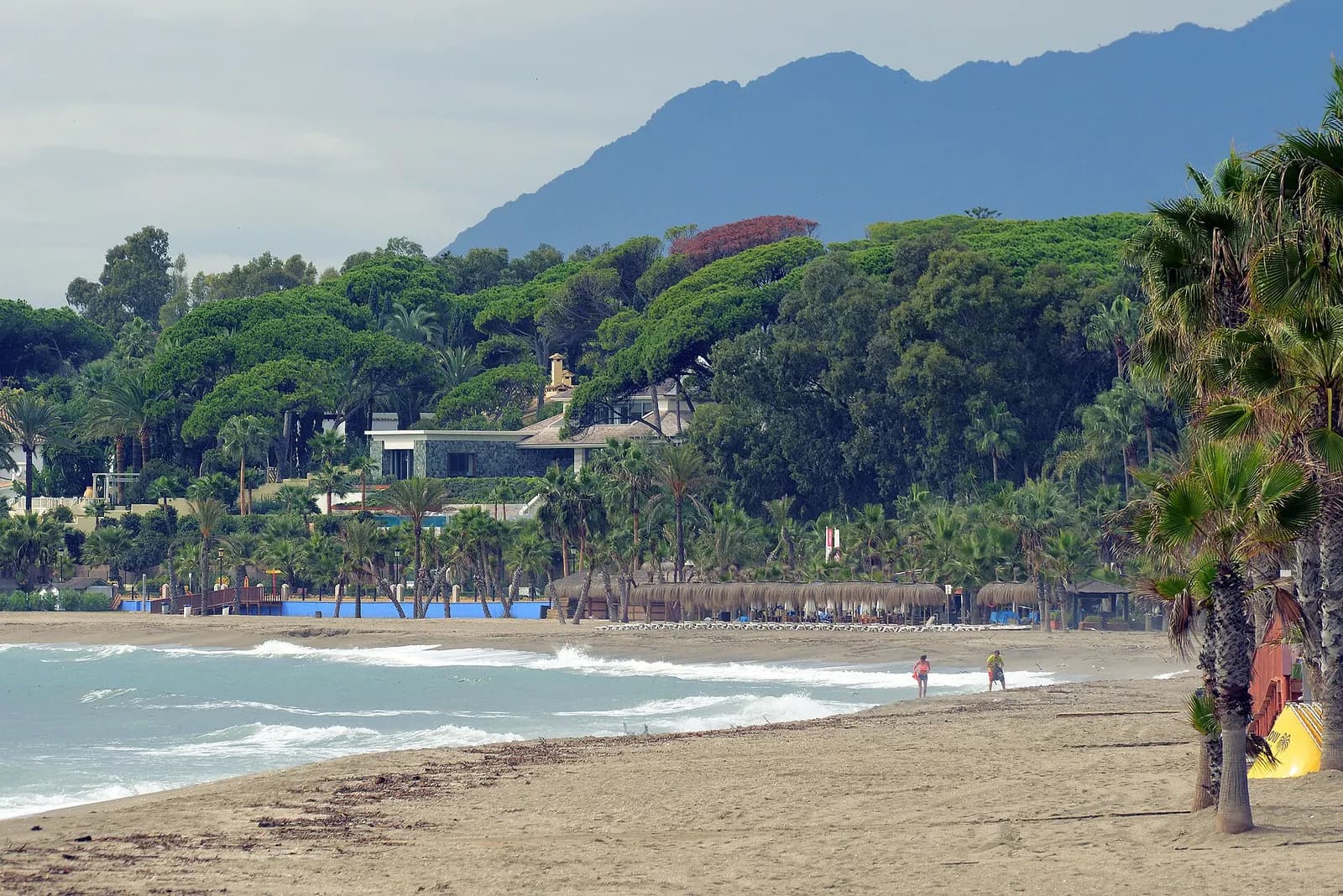
Marbella has about 27 kilometres of coastline. In the centre, the beaches of La Fontanilla and Venus are a few minutes' walk from the Old Town, with sunbeds, showers and beach restaurants.
At the eastern end of the municipality, the beach of Cabopino lies beside the Artola dunes, a protected natural monument and one of the few stretches of this coast that has not been built on.
The Golden Mile
The Golden Mile is the stretch of coast between Marbella town and Puerto Banús. Despite the name it is several kilometres long, and it is where some of the town's long-established hotels and largest private estates are found.
For visitors it is above all a walk: the seafront path passes gardens, beach clubs and quiet beaches, with La Concha in view for most of the way.
Walk up La Concha
La Concha, the summit of the Sierra Blanca, rises to around 1,200 metres directly behind the town. From the top the view takes in the whole coast, and on clear days the Rock of Gibraltar and the mountains of North Africa.
The usual route starts from the Refugio de Juanar, above the village of Ojén. It is a full day's mountain walk on rocky ground: take water and proper footwear, and avoid the midday heat in summer.
Eat espetos by the sea
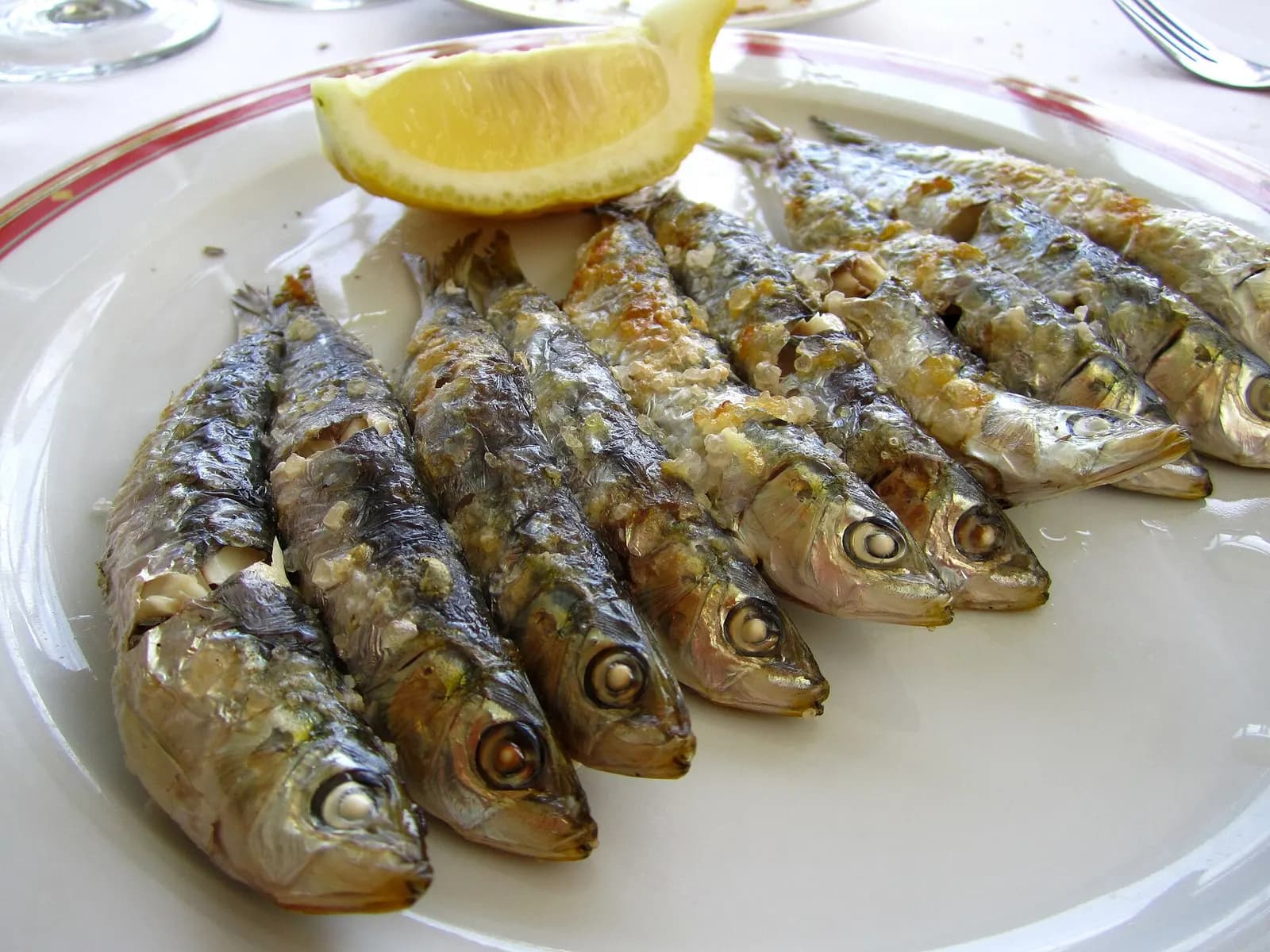
The dish of this coast is the espeto: sardines threaded onto a cane skewer and grilled over a wood fire on the sand. They are served at the beach restaurants known as chiringuitos, usually with nothing more than salt and lemon.
Fried fish, grilled seafood and rice dishes are on most menus beside the sea, while the Old Town is the place for tapas in the evening.
Day trips from Marbella
The white village of Ojén is about ten kilometres inland, at the foot of the Sierra Blanca. Ronda, with its gorge and stone bridge, is about an hour's drive into the mountains, and the city of Málaga is a similar distance along the coast.
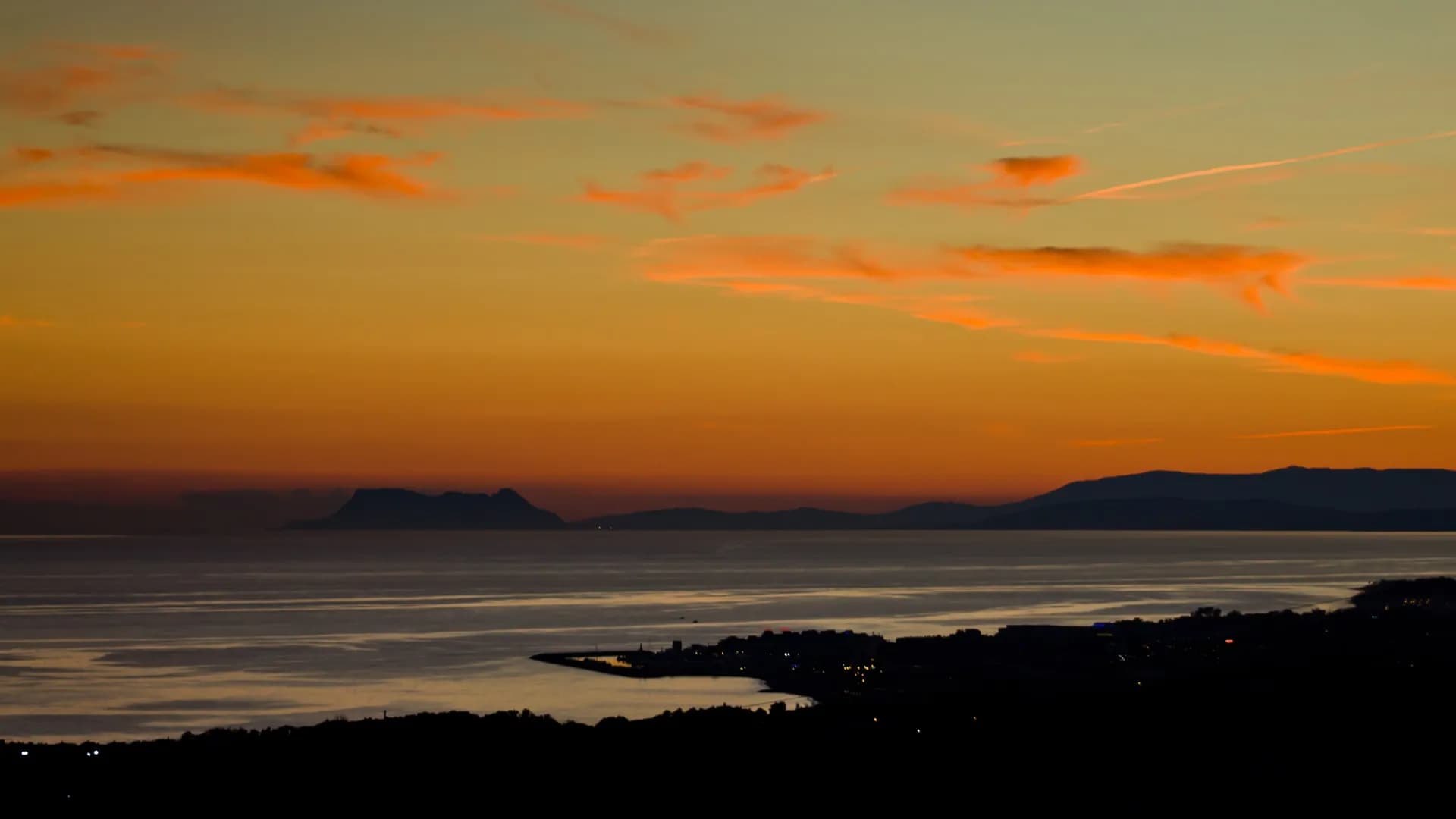
To the west, the coast road leads to Estepona. Evenings are worth saving for the sunset over the sea, with Gibraltar on the horizon when the air is clear.
Sunstars homes in Marbella
51 homes from Sunstars in Marbella: apartments, townhouses and villas, for up to 10 guests. See every home and book direct.
It depends on the holiday. The Old Town suits guests who want to walk everywhere; Puerto Banús suits those who want the marina and the beach close by; Nueva Andalucía is the quieter choice near the golf courses; San Pedro de Alcántara has a wide seafront and a local, everyday feel.
Are Puerto Banús and San Pedro de Alcántara in Marbella?
Yes. Both are part of the municipality of Marbella. Puerto Banús is in the district of Nueva Andalucía, and San Pedro de Alcántara is a district to the west.
How far is Marbella from Málaga Airport?
About 50 kilometres from the centre of Marbella by motorway. Journey time depends on traffic and on the route chosen.
What is there to see in Marbella?
The main sights are the Old Town and its Plaza de los Naranjos, the ten Dalí sculptures on the Avenida del Mar, the Alameda park, the remains of the Moorish castle walls, the Encarnación church, and the Puerto Banús marina. Roman remains survive at Río Verde and near San Pedro de Alcántara.
What are the best-known things to do in Marbella?
Walking the Old Town and the seafront promenade, spending the day on the beach, eating grilled sardines (espetos) at a beach restaurant, visiting Puerto Banús, playing golf in Nueva Andalucía and walking in the Sierra Blanca are the activities most visitors choose.
Where are the Dalí sculptures in Marbella?
On the Avenida del Mar, the pedestrian avenue between the Alameda park and the seafront promenade. There are ten bronze sculptures, in the open air and free to see. A separate Dalí sculpture, a rhinoceros, stands at Puerto Banús.
Can you walk from Marbella to Puerto Banús?
Yes. The seafront promenade runs from the centre of Marbella along the Golden Mile to Puerto Banús, about seven kilometres. It is flat and can also be cycled.
How many Sunstars holiday rentals are there in Marbella?
51 homes at the moment. Guests: 2–10. Bedrooms: 1–5.
Do these homes have a pool?
With a pool: 45 of 51. With a private pool: 4.
What kind of homes are there in Marbella?
Apartments: 34, townhouses: 13 and villas: 4.
How do I check availability and book?
Each home has its own page with a link to the official Sunstars booking page, where availability and prices are confirmed. You can also ask Estela, our AI concierge, or contact the Sunstars team.